Home
|
About CPB
|
Announcement
|
CPS journals
Article lookup
导航切换
Chinese Physics B
Highlights
Special topics
In press
Authors
Submit an article
Manuscript tracking
Call for papers
Scope
Instruction for authors
Copyright agreement
Templates
PACS
Flow chart
Author FAQs
Referees
Review policy
Referee login
Referee FAQs
Editor in chief login
Editor login
Office login
Content of SPECIAL TOPIC—Post-Moore era: Materials and device physics in our journal
Published in last 1 year
|
In last 2 years
|
In last 3 years
|
All
Please wait a minute...
For selected:
Download citations
EndNote
Ris
BibTeX
Toggle thumbnails
Select
Biodegradable and flexible
l
-carrageenan based RRAM with ultralow power consumption
Jing-Yao Bian(卞景垚), Ye Tao(陶冶), Zhong-Qiang Wang(王中强), Xiao-Ning Zhao(赵晓宁), Ya Lin(林亚), Hai-Yang Xu(徐海阳), and Yi-Chun Liu(刘益春)
Chin. Phys. B, 2024, 33 (
2
): 027301. DOI:
10.1088/1674-1056/ad19d4
Abstract
(
362
)
HTML
(
3
)
PDF
(1883KB)(
484
)
Knowledge map
Transient memories, which can physically disappear without leaving traceable remains over a period of normal operation, are attracting increasing attention for potential applications in the fields of data security and green electronics. Resistive random access memory (RRAM) is a promising candidate for next-generation memory. In this context, biocompatible $\iota $-carrageenan ($\iota $-car), extracted from natural seaweed, is introduced for the fabrication of RRAM devices (Ag/$\iota $-car/Pt). Taking advantage of the complexation processes between the functional groups (C-O-C, C-O-H,
et al
.) and Ag metal ions, a lower migration barrier of Ag ions and a high-speed switching (22.2 ns for SET operation/26 ns for RESET operation) were achieved, resulting in an ultralow power consumption of 56 fJ. And the prepared Ag/$\iota $-car/Pt RRAM devices also revealed the capacities of multilevel storage and flexibility. In addition, thanks to the hydrophilic groups of $\iota $-car molecule, the RRAM devices can be rapidly dissolved in deionized (DI) water within 13 minutes, showing excellent transient characteristics. This work demonstrates that $\iota $-car based RRAM devices have great potential for applications in secure storage applications, flexible electronics and transient electronics.
Select
P-type cold-source field-effect transistors with Tc
X
2
and Re
X
2
(
X
=S, Se) cold source electrodes: A computational study
Qianwen Wang(汪倩文), Jixuan Wu(武继璇), Xuepeng Zhan(詹学鹏),Pengpeng Sang(桑鹏鹏), and Jiezhi Chen(陈杰智)
Chin. Phys. B, 2023, 32 (
12
): 127203. DOI:
10.1088/1674-1056/ad0116
Abstract
(
384
)
HTML
(
3
)
PDF
(969KB)(
343
)
Knowledge map
Cold-source field-effect transistors (CS-FETs) have been developed to overcome the major challenge of power dissipation in modern integrated circuits. Cold metals suitable for n-type CS-FETs have been proposed as the ideal electrode to filter the high-energy electrons and break the thermal limit on subthreshold swing (SS). In this work, regarding the p-type CS-FETs, we propose Tc
X
2
and Re
X
2
(
X
= S, Se) as the injection source to realize the sub-thermal switching for holes. First-principles calculations unveils the cold-metal characteristics of monolayer Tc
X
2
and Re
X
2
, possessing a sub-gap below the Fermi level and a decreasing DOS with energy. Quantum device simulations demonstrate that Tc
X
2
and Re
X
2
can enable the cold source effects in WSe
2
p-type FETs, achieving steep SS of 29-38 mV/dec and high on/off ratios of (2.3-5.6)×10
7
. Moreover, multilayer ReS
2
retains the cold metal characteristic, thus ensuring similar CS-FET performances to that of the monolayer source. This work underlines the significance of cold metals for the design of p-type CS-FETs.
Select
Tensile stress regulated microstructures and ferroelectric properties of Hf
0.5
Zr
0.5
O
2
films
Siying Huo(霍思颖), Junfeng Zheng(郑俊锋), Yuanyang Liu(刘远洋), Yushan Li(李育姗),Ruiqiang Tao(陶瑞强), Xubing Lu(陆旭兵), and Junming Liu(刘俊明)
Chin. Phys. B, 2023, 32 (
12
): 127701. DOI:
10.1088/1674-1056/acfb79
Abstract
(
346
)
HTML
(
1
)
PDF
(1242KB)(
345
)
Knowledge map
The discovery of ferroelectricity in HfO
2
based materials reactivated the research on ferroelectric memory. However, the complete mechanism underlying its ferroelectricity remains to be fully elucidated. In this study, we conducted a systematic study on the microstructures and ferroelectric properties of Hf
0.5
Zr
0.5
O
2
(HZO) thin films with various annealing rates in the rapid thermal annealing. It was observed that the HZO thin films with higher annealing rates demonstrate smaller grain size, reduced surface roughness and a higher portion of orthorhombic phase. Moreover, these films exhibited enhanced polarization values and better fatigue cycles compared to those treated with lower annealing rates. The grazing incidence x-ray diffraction measurements revealed the existence of tension stress in the HZO thin films, which was weakened with decreasing annealing rate. Our findings revealed that this internal stress, along with the stress originating from the top/bottom electrode, plays a crucial role in modulating the microstructure and ferroelectric properties of the HZO thin films. By carefully controlling the annealing rate, we could effectively regulate the tension stress within HZO thin films, thus achieving precise control over their ferroelectric properties. This work established a valuable pathway for tailoring the performance of HZO thin films for various applications.
Select
Reconfigurable Mott electronics for homogeneous neuromorphic platform
Zhen Yang(杨振), Ying-Ming Lu(路英明), and Yu-Chao Yang(杨玉超)
Chin. Phys. B, 2023, 32 (
12
): 128401. DOI:
10.1088/1674-1056/ad02e8
Abstract
(
362
)
HTML
(
2
)
PDF
(4581KB)(
229
)
Knowledge map
To simplify the fabrication process and increase the versatility of neuromorphic systems, the reconfiguration concept has attracted much attention. Here, we developed a novel electrochemical VO
2
(EC-VO
2
) device, which can be reconfigured as synapses or LIF neurons. The ionic dynamic doping contributed to the resistance changes of VO
2
, which enables the reversible modulation of device states. The analog resistance switching and tunable LIF functions were both measured based on the same device to demonstrate the capacity of reconfiguration. Based on the reconfigurable EC-VO
2
, the simulated spiking neural network model exhibited excellent performances by using low-precision weights and tunable output neurons, whose final accuracy reached 91.92%.
Select
β
-Ga
2
O
3
junction barrier Schottky diode with NiO p-well floating field rings
Qiming He(何启鸣), Weibing Hao(郝伟兵), Qiuyan Li(李秋艳), Zhao Han(韩照), Song He(贺松),Qi Liu(刘琦), Xuanze Zhou(周选择), Guangwei Xu(徐光伟), and Shibing Long(龙世兵)
Chin. Phys. B, 2023, 32 (
12
): 128507. DOI:
10.1088/1674-1056/accf69
Abstract
(
362
)
HTML
(
2
)
PDF
(2945KB)(
166
)
Knowledge map
Recently,
β
-Ga
2
O
3
, an ultra-wide bandgap semiconductor, has shown great potential to be used in power devices blessed with its unique material properties. For instance, the measured average critical field of the vertical Schottky barrier diode (SBD) based on
β
-Ga
2
O
3
has reached 5.45 MV/cm, and no device in any material has measured a greater before. However, the high electric field of the
β
-Ga
2
O
3
SBD makes it challenging to manage the electric field distribution and leakage current. Here, we show
β
-Ga
2
O
3
junction barrier Schottky diode with NiO p-well floating field rings (FFRs). For the central anode, we filled a circular trench array with NiO to reduce the surface field under the Schottky contact between them to reduce the leakage current of the device. For the anode edge, experimental results have demonstrated that the produced NiO/
β
-Ga
2
O
3
heterojunction FFRs enable the spreading of the depletion region, thereby mitigating the crowding effect of electric fields at the anode edge. Additionally, simulation results indicated that the p-NiO field plate structure designed at the edges of the rings and central anode can further reduce the electric field. This work verified the feasibility of the heterojunction FFRs in
β
-Ga
2
O
3
devices based on the experimental findings and provided ideas for managing the electric field of
β
-Ga
2
O
3
SBD.
ISSN 1674-1056 CN 11-5639/O4
Table of contents
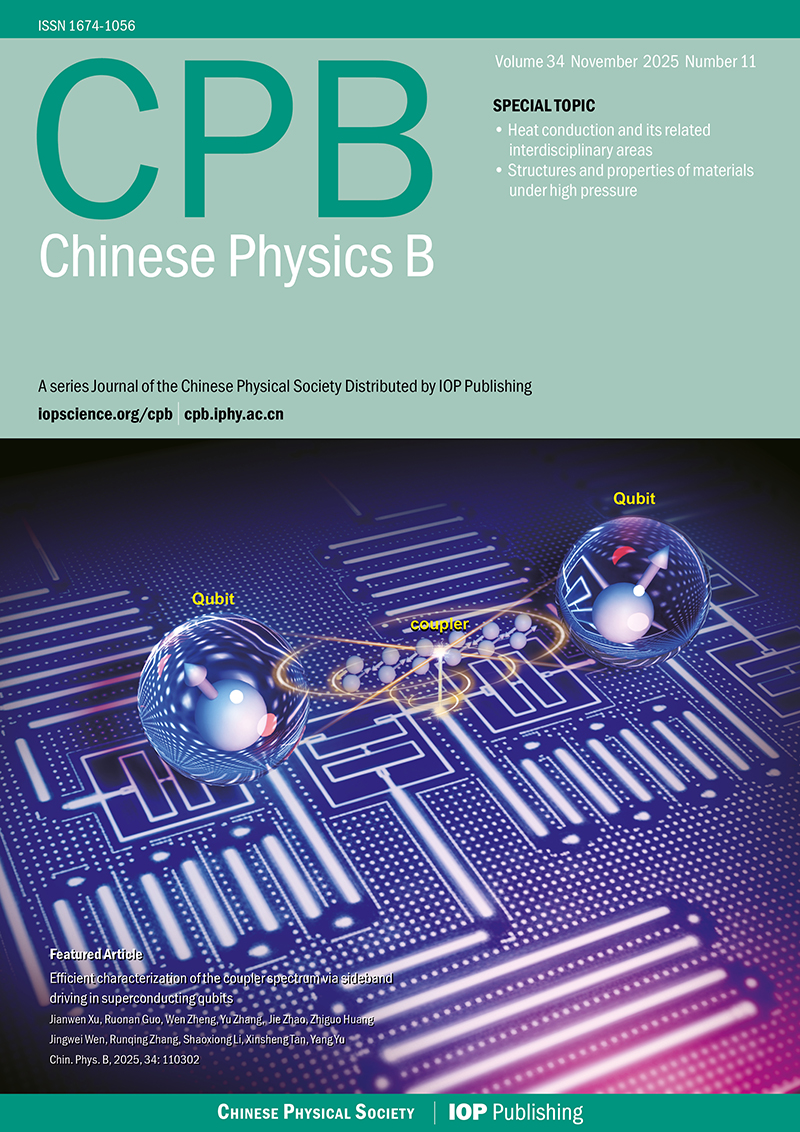
Cover illustration
×
Cover illustration
Download cover
Download table of contents
Current issue
, Vol. 34, No. 11
Previous issues
1992 - present
Featured Columns
Highlights
Awards
SCI top cited
Top downloaded
E-mail alert
RSS