Home
|
About CPB
|
Announcement
|
CPS journals
Article lookup
导航切换
Chinese Physics B
Highlights
Special topics
In press
Authors
Submit an article
Manuscript tracking
Call for papers
Scope
Instruction for authors
Copyright agreement
Templates
PACS
Flow chart
Author FAQs
Referees
Review policy
Referee login
Referee FAQs
Editor in chief login
Editor login
Office login
Content of TOPICAL REVIEW—Post-Moore era: Materials and device physics in our journal
Published in last 1 year
|
In last 2 years
|
In last 3 years
|
All
Please wait a minute...
For selected:
Download citations
EndNote
Ris
BibTeX
Toggle thumbnails
Select
Advances in neuromorphic computing: Expanding horizons for AI development through novel artificial neurons and in-sensor computing
Yubo Yang(杨玉波), Jizhe Zhao(赵吉哲), Yinjie Liu(刘胤洁), Xiayang Hua(华夏扬), Tianrui Wang(王天睿), Jiyuan Zheng(郑纪元), Zhibiao Hao(郝智彪), Bing Xiong(熊兵), Changzheng Sun(孙长征), Yanjun Han(韩彦军), Jian Wang(王健), Hongtao Li(李洪涛), Lai Wang(汪莱), and Yi Luo(罗毅)
Chin. Phys. B, 2024, 33 (
3
): 030702. DOI:
10.1088/1674-1056/ad1c58
Abstract
(
475
)
HTML
(
17
)
PDF
(10310KB)(
314
)
Knowledge map
AI development has brought great success to upgrading the information age. At the same time, the large-scale artificial neural network for building AI systems is thirsty for computing power, which is barely satisfied by the conventional computing hardware. In the post-Moore era, the increase in computing power brought about by the size reduction of CMOS in very large-scale integrated circuits (VLSIC) is challenging to meet the growing demand for AI computing power. To address the issue, technical approaches like neuromorphic computing attract great attention because of their feature of breaking Von-Neumann architecture, and dealing with AI algorithms much more parallelly and energy efficiently. Inspired by the human neural network architecture, neuromorphic computing hardware is brought to life based on novel artificial neurons constructed by new materials or devices. Although it is relatively difficult to deploy a training process in the neuromorphic architecture like spiking neural network (SNN), the development in this field has incubated promising technologies like in-sensor computing, which brings new opportunities for multidisciplinary research, including the field of optoelectronic materials and devices, artificial neural networks, and microelectronics integration technology. The vision chips based on the architectures could reduce unnecessary data transfer and realize fast and energy-efficient visual cognitive processing. This paper reviews firstly the architectures and algorithms of SNN, and artificial neuron devices supporting neuromorphic computing, then the recent progress of in-sensor computing vision chips, which all will promote the development of AI.
Select
Recent progress on two-dimensional ferroelectrics: Material systems and device applications
Zhiwei Fan(范芷薇), Jingyuan Qu(渠靖媛), Tao Wang(王涛), Yan Wen(温滟), Ziwen An(安子文), Qitao Jiang(姜琦涛), Wuhong Xue(薛武红), Peng Zhou(周鹏), and Xiaohong Xu(许小红)
Chin. Phys. B, 2023, 32 (
12
): 128508. DOI:
10.1088/1674-1056/ad08a4
Abstract
(
461
)
HTML
(
3
)
PDF
(8731KB)(
279
)
Knowledge map
Ferroelectrics are a type of material with a polar structure and their polarization direction can be inverted reversibly by applying an electric field. They have attracted tremendous attention for their extensive applications in non-volatile memory, sensors and neuromorphic computing. However, conventional ferroelectric materials face insulating and interfacial issues in the commercialization process. In contrast, two-dimensional (2D) ferroelectric materials usually have excellent semiconductor performance, clean van der Waals interfaces and robust ferroelectric order in atom-thick layers, and hold greater promise for constructing multifunctional ferroelectric optoelectronic devices and nondestructive ultra-high-density memory. Recently, 2D ferroelectrics have obtained impressive breakthroughs, showing overwhelming superiority. Herein, firstly, the progress of experimental research on 2D ferroelectric materials is reviewed. Then, the preparation of 2D ferroelectric devices and their applications are discussed. Finally, the future development trend of 2D ferroelectrics is looked at.
Select
Silicon-based optoelectronic heterogeneous integration for optical interconnection
Le-Liang Li(李乐良), Gui-Ke Li(李贵柯), Zhao Zhang(张钊), Jian Liu(刘剑), Nan-Jian Wu(吴南健), Kai-You Wang(王开友), Nan Qi(祁楠), and Li-Yuan Liu(刘力源)
Chin. Phys. B, 2024, 33 (
2
): 024201. DOI:
10.1088/1674-1056/ad0e5b
Abstract
(
461
)
HTML
(
8
)
PDF
(3660KB)(
734
)
Knowledge map
The performance of optical interconnection has improved dramatically in recent years. Silicon-based optoelectronic heterogeneous integration is the key enabler to achieve high performance optical interconnection, which not only provides the optical gain which is absent from native Si substrates and enables complete photonic functionalities on chip, but also improves the system performance through advanced heterogeneous integrated packaging. This paper reviews recent progress of silicon-based optoelectronic heterogeneous integration in high performance optical interconnection. The research status, development trend and application of ultra-low loss optical waveguides, high-speed detectors, high-speed modulators, lasers and 2D, 2.5D, 3D and monolithic integration are focused on.
Select
Ferroelectric domain wall memory
Yiming Li(李一鸣), Jie Sun(孙杰), and Anquan Jiang(江安全)
Chin. Phys. B, 2023, 32 (
12
): 128504. DOI:
10.1088/1674-1056/ace4b6
Abstract
(
359
)
HTML
(
2
)
PDF
(1883KB)(
342
)
Knowledge map
Ferroelectric domain walls appear as sub-nanometer-thick topological interfaces separating two adjacent domains in different orientations, and can be repetitively created, erased, and moved during programming into different logic states for the nonvolatile memory under an applied electric field, providing a new paradigm for highly miniaturized low-energy electronic devices. Under some specific conditions, the charged domain walls are conducting, differing from their insulating bulk domains. In the past decade, the emergence of atomic-layer scaling solid-state electronic devices is such demonstration, resulting in the rapid rise of domain wall nano-electronics. This review aims to the latest development of ferroelectric domain-wall memories with the presence of the challenges and opportunities and the roadmap to their future commercialization.
Select
Recent progress on ambipolar 2D semiconductors in emergent reconfigurable electronics and optoelectronics
Yuehao Zhao(赵月豪), Haoran Sun(孙浩然), Zhe Sheng(盛喆), David Wei Zhang(张卫),Peng Zhou(周鹏), and Zengxing Zhang(张增星)
Chin. Phys. B, 2023, 32 (
12
): 128505. DOI:
10.1088/1674-1056/ad08a5
Abstract
(
331
)
HTML
(
3
)
PDF
(2070KB)(
432
)
Knowledge map
In these days, the increasing massive data are being produced and demanded to be processed with the rapid growth of information technology. It is difficult to rely solely on the shrinking of semiconductor devices and scale-up of the integrated circuits (ICs) again in the foreseeable future. Exploring new materials, new-principle semiconductor devices and new computing architectures is becoming an urgent topic in this field. Ambipolar two-dimensional (2D) semiconductors, possessing excellent electrostatic field controllability and flexibly modulated major charge carriers, offer a possibility to construct reconfigurable devices and enable the ICs with new functions, showing great potential in computing capacity, energy efficiency, time delay and cost. This review focuses on the recent significant advancements in reconfigurable electronic and optoelectronic devices of ambipolar 2D semiconductors, and demonstrates their potential approach towards ICs, like reconfigurable circuits and neuromorphic chips. It is expected to help readers understand the device design principle of ambipolar 2D semiconductors, and push forward exploring more new-principle devices and new-architecture computing circuits, and even their product applications.
Select
The rise of supercapacitor diodes: Current progresses and future challenges
Hongyun Ma(马鸿云), Lingxiao Ma(马凌霄), Huasheng Bi(毕华盛), and Wei Lan(兰伟)
Chin. Phys. B, 2024, 33 (
2
): 028201. DOI:
10.1088/1674-1056/ad1171
Abstract
(
324
)
HTML
(
4
)
PDF
(5566KB)(
252
)
Knowledge map
Supercapacitor has been widely known as a representative electrochemical energy storage device with high power density and long lifespan. Recently, with the deeper understanding of its charge storage mechanism, unidirectional-charging supercapacitor, also called supercapacitor diode (CAPode), is successfully developed based on the ion-sieving effect of its working electrode towards electrolyte ions. Because CAPode integrates mobile ion and mobile electron in one hybrid circuit, it has a great potential in the emerging fields of ion/electron coupling logic operations, human-machine interface, neural network interaction, and
in vivo
diagnosis and treatment. Accordingly, we herein elucidate the working mechanism and design philosophy of CAPode, and summarize the electrode materials that are suitable for constructing CAPode. Meanwhile, some other supercapacitor-based devices beyond CAPode are also introduced, and their potential applications are instructively presented. Finally, we outline the challenges and chances of CAPode-related techniques.
ISSN 1674-1056 CN 11-5639/O4
Table of contents
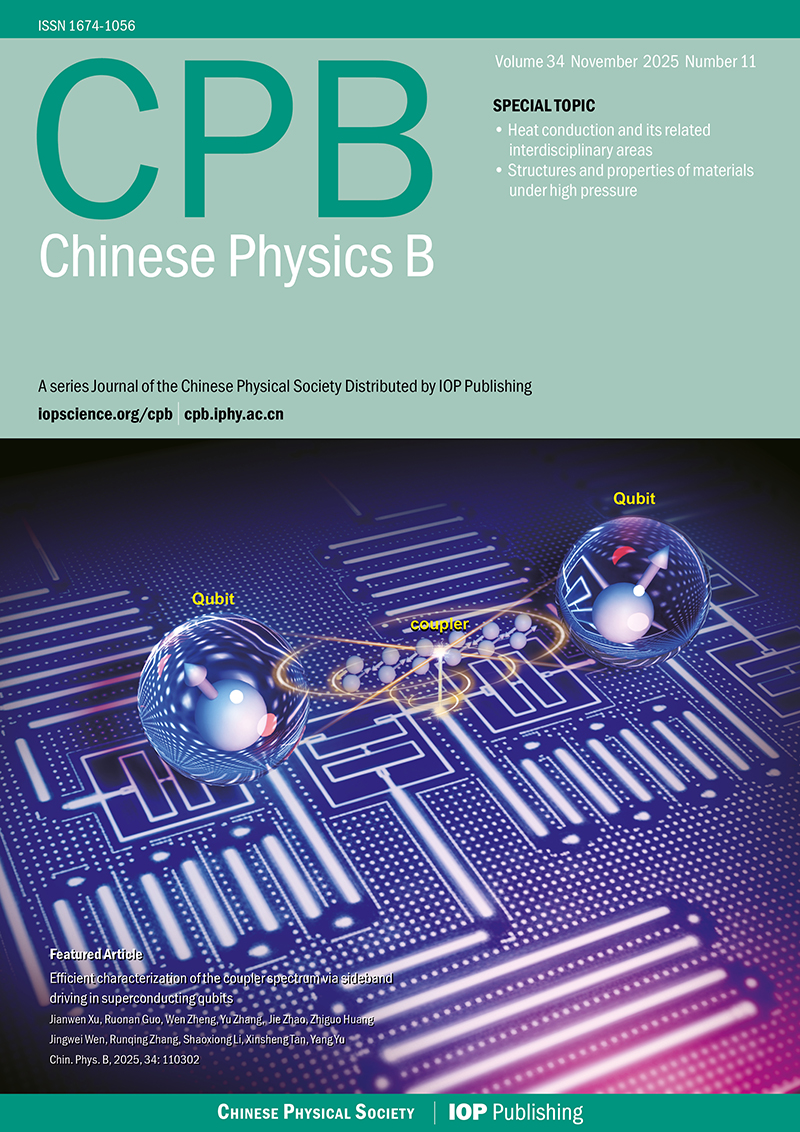
Cover illustration
×
Cover illustration
Download cover
Download table of contents
Current issue
, Vol. 34, No. 11
Previous issues
1992 - present
Featured Columns
Highlights
Awards
SCI top cited
Top downloaded
E-mail alert
RSS